These are truly scenes from hell, written on the darkest pages of human history.
Judge Fouad Riad (1995), reviewing the Srebrenica killings
If anyone in the genocidal 20th century deserved the title of monster, it was the Bosnian Serb genocidaire General Ratko Mladić. The hecatombs the Butcher of Bosnia left in his wake of showed that not every killer met Hannah Arendt’s criterion for the banality of evil; Mladic instead had an evil charisma that appealed only to Bosnian Serbs and Milosevic, his puppet master in Belgrade.
Mladić had a reductionistic view of his cause and his enemies. The nation of Serbia, victimised for centuries, was his sole raison d’être; other nationalities of the former Yugoslavia deserved nothing but extermination. The breakup provided him with the opportunity to repair the damages of history and recreate a Greater Serbia. Croatia, Slovenia and Montenegro, nations of scum to his mind, could destroy each other, but Bosnia Herzegovina with its multiethnic population was a provocation that could not be allowed to continue. His hatred for ‘Turks’ – Bosniaks – was venomous, ignoring the reality that under the Ottoman Empire, what became Yugoslavia had been relatively peaceful.
Thus commenced the killing fields of the Bosnian War (1992-1995). The rebarbative psychiatrist Radovan Karadzic was the political avatar to Mladić’s military arm. The consequences were horrendous. Up to 100,000 deaths, two million displaced refugees, and even more traumatised by the brutal tactics. Ethnic cleansing – a term Mladic used with merciless effectiveness – was combined with the deliberate tactic of mass rape.
He besieged Sarajevo for over three years, took 400 UN soldiers hostage, ran appalling detention centres and “rape camps” to terrorise civilians. During the siege, he ordered artillery officers to “target the Muslim areas. Shell them until they are on the verge of madness.”
Like Karadzic, Mladic was shaped by the chaos of World War 2 with close relatives killed by forces who spent more time attacking other Yugoslavs than the German enemy. He never wanted to be anything but a soldier and steadily rose up the ranks until Milosevic gave him the opportunity to build a Greater Serbia.
Spitting out his hatred relentlessly, Mladić killed and killed and killed. The apotheosis came at Srebrenica, where he bussed out women and the aged, assuring them that all was well before systemically killing 8000 men and boys, boasting that he was “presenting this city to the Serbian nation as a gift”; the rest of the world knew it as the worst European massacre since World War 2.
His one vulnerability was his family. With his wife Bosiljka he had a son Darko and daughter Ana. When she shot herself in March 1994 after reading a newspaper article that described his brutality Mladic closed in on himself and became even more focused on extermination – there is an analogy with Stalin after his wife suicided.
Mladic was a repulsive individual, coarse in his behaviour, crude in his speech, only loved by his soldiers and Bosnian Serb nationalists who still buy T-shirts with his image at markets.
The massacres, tortures, rapes and destruction could not last. Karadzic and Mladic detested each other; Milosevic found him an embarrassment. Europe and America eventually woke. At the Dayton talks, Bosnian Serbia would remain as a rump state, but the game was up.
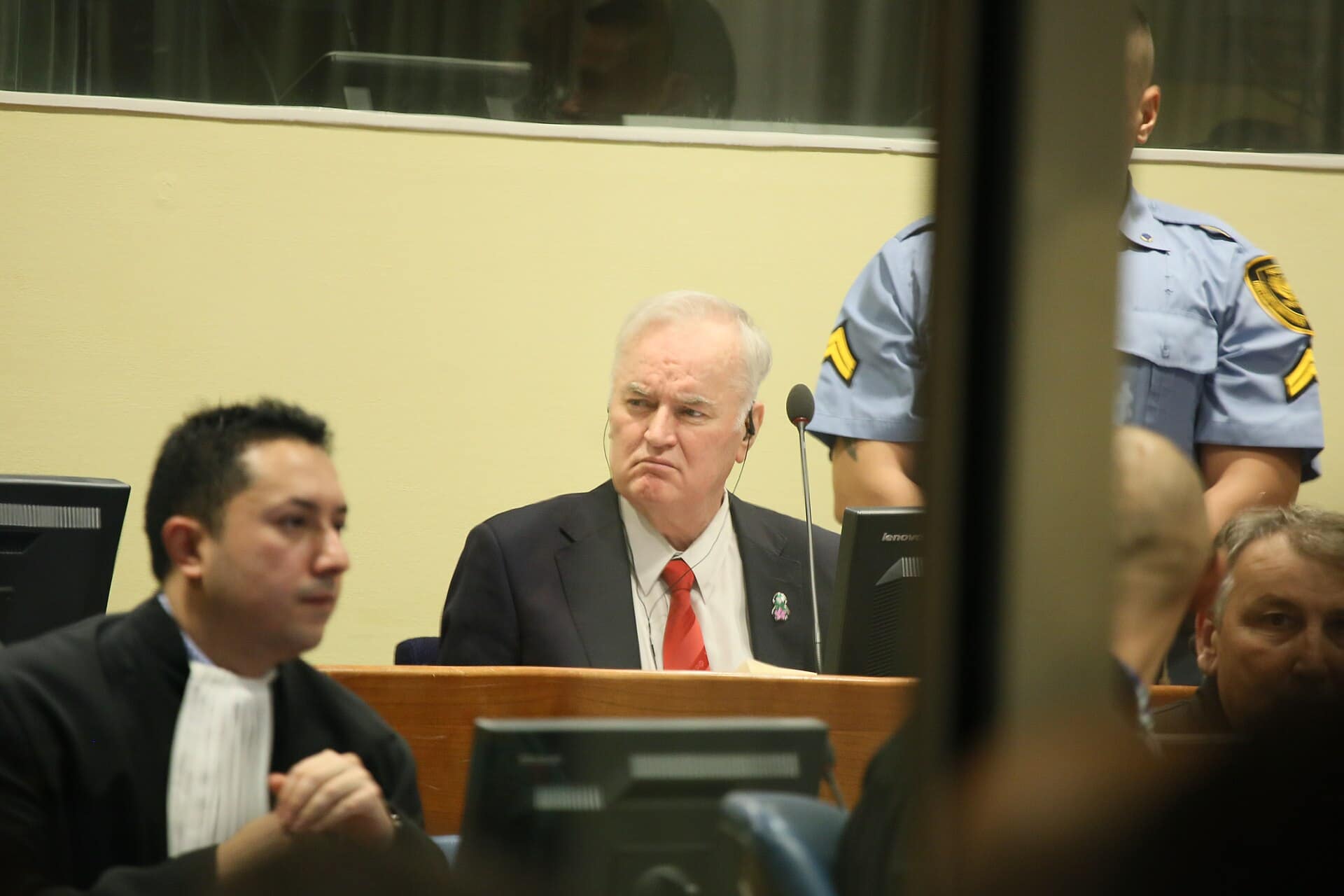
It took years, but one by one, first Milosevic, then Karadzic and, after 16 years on the run, Mladic were pulled in. Hauled before the court in The Hague, he was dismissive of its authority and utterly unrepentant for what he had done. He was to rot in jail for 16 years, debilitated by a series of strokes.
Now he is gone. If there is ever a case for bringing back the death penalty for genocidaires, it is with Mladic. Such an individual can only have his physical presence removed forever. Of the horrendous three who left Bosnia littered with so many graves, only Karadzic is left. He is reported to be ailing in an English prison, so it will not be long before the last of the trio is removed; it will take decades before the damage they did can be forgiven, if ever.
Robert M Kaplan is a forensic psychiatrist, writer and historian who writes on medicine, crime and genocide.
Words: 726